Last reviewed: September 2026. Prices are typical ranges from UK cost guides, not quotes.
The roof covering you choose affects how your home looks, how the roof performs and what it costs to maintain for decades. This guide compares three common options in the UK — natural slate, clay tiles and concrete tiles — to help you choose.
Natural Slate
Slate is a natural stone that has been used on British roofs for centuries. Welsh slate has a long track record, and imported slates such as Spanish slate are usually cheaper.
- Appearance: Natural look with subtle colour variations. Weathers well.
- Typical cost: £95–£220 per m² supplied and fitted (imported slate at the lower end)
- Typical lifespan: often 100 years or more, depending on the slate and the fixings
- Weight: Heavier coverings can need a structural check — see below
- Maintenance: Low. Individual slates can be replaced if damaged.
- Often chosen for: Period homes, listed buildings, conservation areas and homeowners wanting a premium finish
Clay Tiles
Clay tiles have been a staple of British roofs for hundreds of years. They come in plain tiles, pantiles and interlocking designs, and suit both traditional and some modern homes.
- Appearance: Warm reds, browns and blended colours.
- Typical cost: £40–£160 per m² supplied and fitted
- Typical lifespan: around 50–60 years with good installation and maintenance
- Weight: Moderate to heavy, depending on the tile
- Maintenance: Low. Individual tiles can be replaced if damaged.
- Often chosen for: Traditional homes and homeowners wanting a classic look without the cost of slate
Concrete Tiles
Concrete tiles are one of the most common roof coverings in the UK. They come in profiles that imitate both slate and clay.
- Appearance: Wide range of colours and profiles. Colours can lighten as the surface weathers.
- Typical cost: £35–£120 per m² supplied and fitted
- Typical lifespan: around 50–60 years with good installation and maintenance
- Weight: Can be heavy, depending on the profile
- Maintenance: Can be more prone to moss than clay or slate.
- Often chosen for: Homeowners on a tighter budget, newer homes and extensions
Comparison at a Glance
| Factor | Natural Slate | Clay Tiles | Concrete Tiles |
|---|---|---|---|
| Typical cost (supplied and fitted) | £95–£220/m² | £40–£160/m² | £35–£120/m² |
| Typical lifespan | Often 100+ years | Around 50–60 years | Around 50–60 years |
| Appearance | Premium, natural | Warm, traditional | Practical, varied |
| Maintenance | Low | Low | Low to moderate |
Cost guides don't all agree, which is why the ranges are wide. Scaffolding, stripping the old roof and VAT can be extra.
Changing Material: Weight, Planning and Consent
- Weight: In England, a building control application is needed if the new covering increases the weight on the roof by 15% or more. Swapping to a heavier material can also mean strengthening the roof, so ask the roofer whether a structural check is needed.
- Listed buildings: Listed building consent is needed for work that affects the character of a listed building, which can include changing roof materials. Doing that work without consent is a criminal offence.
- Conservation areas and Article 4 directions: Changing how a roof looks can need planning permission, and some councils use Article 4 directions to require permission even for replacement roof coverings. Check with your council before choosing a different material.
Which Material Suits Your Home?
Period and Listed Homes
Natural slate or the original material is often expected on listed buildings and in conservation areas. What is acceptable depends on the building and the council, so check before you commit.
Traditional Homes
Clay tiles suit many Victorian, Edwardian and inter-war homes and give a traditional look for less than slate.
Modern Homes and Extensions
Concrete tiles work well on many modern homes where budget is a priority, and on extensions where they match the main roof.
Flat Roofs
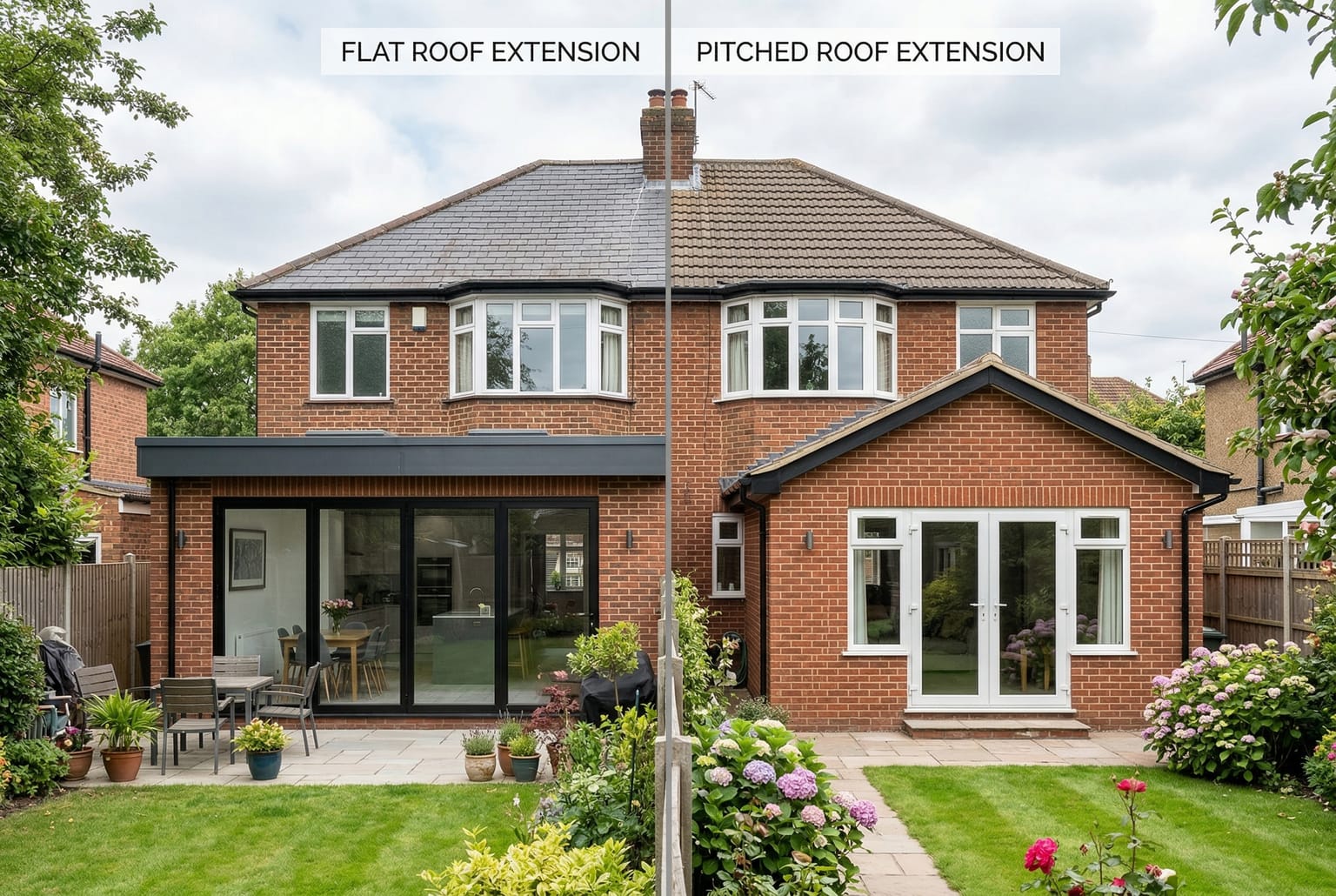
None of these coverings is suitable for a flat roof — you'll need a flat roofing system such as EPDM or GRP instead.
Not Sure Which Is Right for You?
The best choice depends on your home, your budget, your area and the look you want. Better Roofing doesn't fit roofs itself. Send us an enquiry — it's free and there's no obligation — and Better Home Hub will try to introduce you to a suitable local roofer who can advise and quote.