Last reviewed: September 2026. Prices are typical ranges from UK cost guides, not quotes.
If you're planning a home extension, one of the earliest decisions is whether it has a flat roof or a pitched roof. Both have their place, and the right choice depends on your budget, the style of your home, and how you want the extension to look and perform. Here's a plain comparison to help you decide.
Flat Roofs for Extensions
Modern flat roofing systems have moved on from the old felt roofs that gave flat roofs a bad reputation. GRP (fibreglass) and EPDM rubber are now widely used and are generally longer-lasting than traditional felt.
Pros
- Usually cheaper: simpler construction and fewer materials than a pitched roof of the same size
- Quicker to build: less complex, so the extension is weathertight sooner
- Full ceiling height: no sloping ceilings inside
- Lower overall height: helpful where height limits or neighbours' light are a concern
- Good for roof lanterns and skylights: easy to bring in natural light from above
Cons
- Shorter lifespan: flat roofs typically last around 15–30 years depending on the material, compared with around 50–60 years for a tiled pitched roof and often 100 years or more for natural slate
- Drainage matters: a flat roof needs a slight fall so water drains away; poor workmanship leads to ponding and leaks
- Looks: a flat roof can look out of place on a traditional house, especially from the street
Typical Cost
Cost guides put flat roof coverings such as EPDM and GRP at roughly £80–£180 per m² supplied and fitted. For a single-storey rear extension of about 15–25m², that is roughly £1,200–£4,500 for the roof covering, excluding the structure of the extension itself.
Pitched Roofs for Extensions
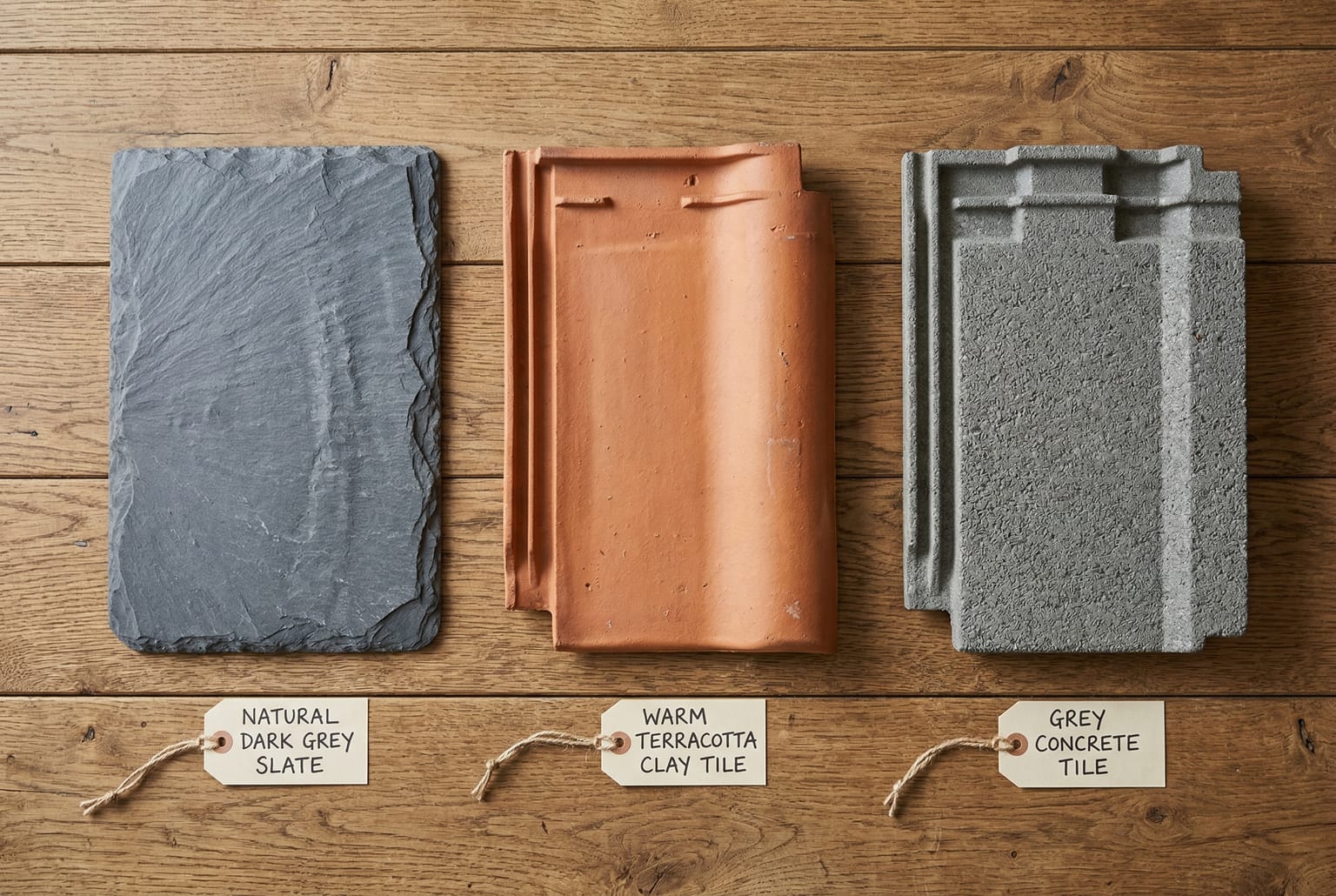
A pitched roof can match the extension to the main house, and can be covered in slate, clay tiles or concrete tiles to match.
Pros
- Longer-lasting covering: tiled roofs typically last around 50–60 years, and natural slate often 100 years or more
- Blends in: can match the materials and style of the existing house
- Sheds water by gravity: no standing water
- Some roof space: a steeper pitch can leave room for storage above
Cons
- Higher cost: more structure, more materials and longer build times
- More height: a pitched roof adds height, which can affect neighbours' light and whether the extension fits within permitted development limits
- Sloping ceilings: unless the roof space is boxed in
Typical Cost
A pitched roof usually costs more than a flat roof of the same size. As a guide, Checkatrade puts replacing a small flat roof with a pitched one at roughly £3,000–£4,500; larger or more complex roofs, and slate coverings, cost more.
Key Considerations
Planning Permission
In England, whether an extension needs planning permission depends on its size, height and position, not just its roof type. A single-storey rear extension can fall under permitted development if it stays within limits: for example, it can't be more than four metres high, and if it's within two metres of a boundary the eaves can't be higher than three metres. The materials should look similar to the existing house. Permitted development rules don't apply to flats and maisonettes, and they can be restricted in conservation areas, for listed buildings and where an Article 4 direction applies. Check the Planning Portal or ask your council before you commit.
Building Regulations and Insulation
An extension needs building regulations approval, and its roof has to meet current standards for structure and insulation whichever style you choose. Flat roofs are often insulated with rigid boards above or below the deck; pitched roofs can be insulated at rafter or ceiling level.
Property Style
As a general rule, flat roofs suit modern homes and rear extensions that can't be seen from the street. Pitched roofs often suit side extensions, front-facing additions and traditional homes, where a flat roof would look out of place.
Which Should You Choose?
| Factor | Flat Roof | Pitched Roof |
|---|---|---|
| Cost | Usually lower | Usually higher |
| Typical lifespan | Around 15–30 years | Around 50–60 years (tiles); often 100+ (slate) |
| Looks | Modern, minimal | Traditional, matches the house |
| Planning | Depends on size, height and position | Depends on size, height and position; adds height |
| Internal space | Full height throughout | Sloping sections possible |
| Maintenance | Keep drainage clear; check the covering | Occasional checks of tiles, ridge and flashing |
Get Advice for Your Extension
The right roof for your extension depends on your home, your budget and your local planning rules. Better Roofing doesn't build roofs itself. Send us an enquiry — it's free and there's no obligation — and Better Home Hub will try to introduce you to a suitable local roofer who can advise and quote.